
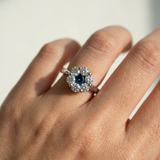
Blue Diamond Cluster Ring — Natural Blue & White Diamonds, 1.00tcw | Flower Design | 14kt White Gold
$1,200.00
Gold Diamond Jewelry


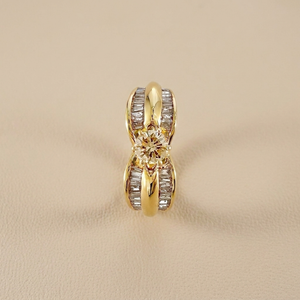
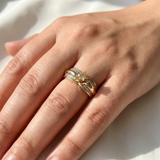
A vintage-silhouette cluster diamond ring built around 1.00tcw of round natural diamonds (G/H color, SI1/SI2 clarity) prong-set across the face of a 14kt yellow gold band. The ring reads as an art deco cluster with low, flat geometry — substantial enough to be a primary statement ring, low-profile enough to be worn as an unconventional wedding band or a stacked anniversary piece. 5.65g gold weight, 7.70mm band length across the face. SKU: AJDR-0123. $1,640.
A cluster diamond ring groups multiple smaller diamonds into a single unified pattern, so the ring reads like one larger stone rather than an arrangement of individual gems. The effect is a concentrated sparkle area with more surface brilliance per carat than a single solitaire of equivalent weight, because the facet count multiplies across the cluster. This particular cluster uses round brilliant diamonds arranged in a vintage-silhouette pattern, prong-set low to the hand for a flat profile rather than a raised crown.
All diamonds are natural mined diamonds, 1.00tcw total weight, graded G/H for color (near-colorless, with no visible yellow tint) and SI1/SI2 for clarity (slightly included, with inclusions not visible to the naked eye at standard viewing distance). The G/H color grade pairs well with yellow gold — higher color grades would read cooler and fight the warm metal; lower grades would show as yellow-on-yellow. G/H sits at the sweet spot for 14kt yellow gold settings.
The cluster geometry reads as art deco rather than contemporary — flat, wide, and symmetrical rather than raised or asymmetric. Art deco cluster designs originated in the 1920s and 1930s and remain a reference point for buyers who want a vintage aesthetic without buying estate jewelry. The 14kt yellow gold band at 5.65g is substantial enough for daily wear and reads as warm and rich against the diamond pavé. Yellow gold cluster rings are less common in the current market than white gold — most modern cluster settings use white gold because it sells more broadly — so this yellow gold version is a narrower but dedicated market.
As a statement right-hand ring. The most common use. At 1.00tcw with a wide cluster face, the ring reads as a primary fashion statement and sits well alongside thin stacking rings or worn alone.
As an unconventional wedding band. The low, flat cluster profile allows this ring to function as a wedding band for buyers who don't want a plain band or a conventional solitaire-and-band combination. The cluster reads as a single unified statement on the finger rather than as a separate accent piece, which is what makes it a workable alternative to a traditional wedding band for couples who want something less conventional. Pair with no engagement ring (the cluster is the entire bridal statement), or stack with a thin plain yellow gold band.
As an anniversary or milestone ring. The carat weight (1.00tcw) and price point ($1,640) sit in the considered-gift range for significant anniversaries, promotions, or self-purchase milestones.
Buyers who want the vintage cluster aesthetic without the uncertainty of estate jewelry — everything here is newly made, quality-controlled, and sized. Yellow gold preference (not white or rose). Comfortable with an SI1/SI2 clarity grade (no visible inclusions but not flawless). Open to an unconventional wedding band approach, or shopping for a right-hand statement piece that doesn't signal engagement. Typical buyer age 30 to 55, values craftsmanship and design over brand prestige.
A cluster diamond ring groups multiple smaller diamonds into a single unified pattern on the ring face, designed to read as one larger stone rather than a collection of individual gems. The design concentrates sparkle across a small area because each diamond contributes its own facet pattern, multiplying the total surface brilliance beyond what a solitaire of equivalent total carat weight would produce. Cluster designs have a long history in fine jewelry — they were especially popular in art deco (1920s to 1930s) and retro (1940s to 1950s) eras and remain a reference point for vintage-aesthetic buyers today. Modern cluster rings come in round, daisy (floral), square, and asymmetric configurations and work as engagement rings, right-hand rings, wedding bands, or anniversary pieces depending on the carat weight and profile height. This particular ring is a 1.00tcw round brilliant cluster in 14kt yellow gold with a low, flat art deco profile, which makes it versatile across occasion types.
Gold Diamond Jewelry

Gold Diamond Gemstone Jewelry


Gold Diamond Jewelry
Gold Diamond Jewelry