Posted by Treasured & Co. on 28th Apr 2026
Engagement Ring Setting Guide
Engagement Ring Settings Guide 2026: 16 Diamond Setting Styles Compared
A complete visual guide to diamond engagement ring settings — from solitaire and halo to hidden halo, bezel, three-stone, cathedral, and floating designs — with recommendations by diamond shape, lifestyle, carat size, and wedding-band fit.
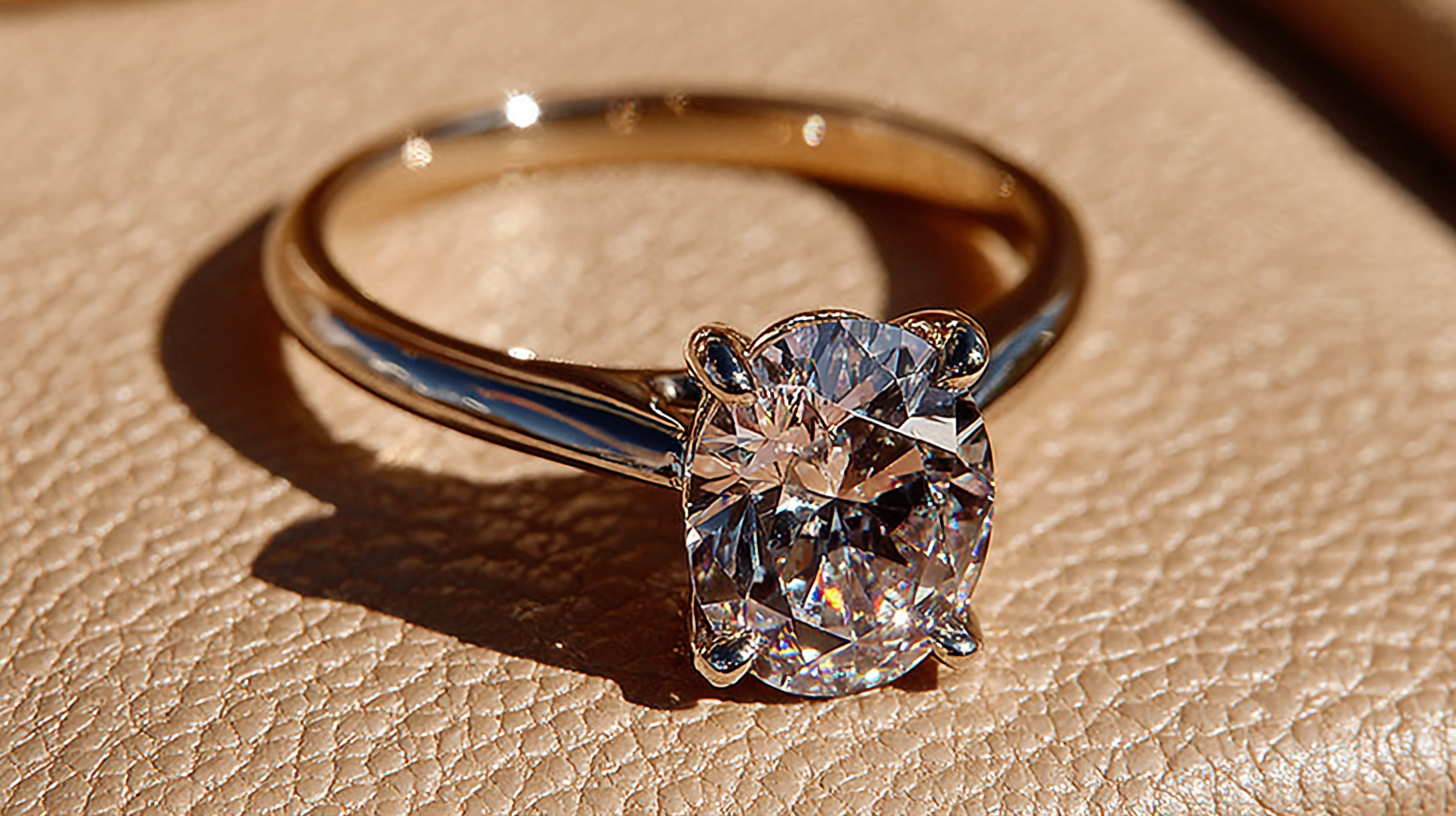
What is a diamond engagement ring setting?
An engagement ring setting is the metal structure that holds the center diamond and defines the ring’s overall design. It includes the prongs, bezel, basket, gallery, side stones, band style, and any accent diamonds. The setting determines five things: security, style, brilliance, comfort, and wedding-band fit.
Choosing an engagement ring is not only about the diamond — the setting shapes the entire design. It controls how the diamond sits, how much light enters the stone, how secure the ring feels, how it pairs with a wedding band, and how the ring looks on the hand every day.
A round diamond in a solitaire feels classic and clean. An oval diamond in a hidden halo feels refined with quiet detail. A pear-shaped diamond in a three-stone setting can feel romantic and sculptural. The same diamond can look completely different depending on the setting around it.
This guide breaks down the 16 most popular engagement ring settings, how each one works, which diamond shapes they suit best, and what to consider before choosing one. Whether you are looking for a simple solitaire engagement ring, a diamond halo or hidden halo, a vintage-inspired design, or a fully custom engagement ring, the right setting should balance beauty, comfort, security, and long-term wear.
At Treasured & Co., we focus on unique and one-of-a-kind engagement rings — including ready-to-ship designs, vintage engagement rings, and custom rings built around the diamond or gemstone you love.
Shop unique engagement rings →
Quick comparison: 16 engagement ring settings at a glance
Use this comparison to narrow down the engagement ring setting that fits your style, lifestyle, and chosen diamond shape. Each setting links to the in-depth section below.
| Setting | Best for | Style feel | Maintenance | Best diamond shapes |
|---|---|---|---|---|
| Solitaire | Clean, timeless designs | Minimal, classic | Low | Round, oval, emerald, cushion, pear |
| 4-Prong | More diamond visibility | Light, open, delicate | Low–Medium | Princess, oval, emerald, cushion |
| 6-Prong | Added center-stone security | Classic, balanced | Low | Round, oval, cushion |
| Bezel | Active lifestyles | Modern, smooth, protective | Low | Oval, emerald, round, pear, marquise |
| Halo | Bigger visual presence | Brilliant, detailed | Medium | Round, cushion, oval, pear |
| Hidden Halo | Subtle modern detail | Refined, contemporary | Medium | Oval, round, cushion, pear, emerald |
| Pavé | Extra diamond detail | Bright, elegant | Medium–High | Round, oval, cushion, emerald |
| Channel Set | Smooth diamond band | Sleek, practical | Medium | Round, princess, baguette accents |
| Three-Stone | Meaningful symbolism | Balanced, romantic | Medium | Oval, emerald, round, pear |
| Side-Stone | Soft accent design | Detailed, classic | Medium | Oval, round, emerald, cushion |
| Split Shank | Architectural detail | Distinctive, dimensional | Medium | Oval, cushion, emerald, pear |
| East-West | Modern orientation | Contemporary, unexpected | Low–Medium | Emerald, oval, marquise, radiant |
| Cluster | Unique visual shape | Artistic, one-of-a-kind | Medium | Round, pear, marquise, mixed cuts |
| Vintage-Inspired | Antique character | Detailed, romantic | Medium | Old mine, oval, emerald, cushion |
| Cathedral | Architectural lift | Tall, regal, dramatic | Low–Medium | Round, oval, princess, cushion |
| Tension | Modernist minimalism | Bold, sculptural | Low | Round, princess, emerald |
| Floating Diamond | Suspended, weightless look | Modern, conceptual | Low | Round, oval, emerald, princess |
| Tiffany-Style | Iconic 6-prong solitaire | Heritage, elevated | Low | Round, oval, cushion |
1. Solitaire engagement ring setting
A solitaire engagement ring features one center diamond with no side stones or halo. It is the cleanest, most flexible, and most timeless of all diamond engagement ring settings — and works with virtually every diamond shape.

A solitaire works especially well when the center stone has strong proportions or a distinctive cut, because the design keeps every eye on the diamond itself. It is also one of the most practical settings for everyday wear: fewer accent stones means less to maintain.
Best for
Buyers who want a classic ring that does not feel over-designed.
Works especially well with
Round, oval, emerald-cut, cushion, pear, marquise, and princess-cut diamonds.
Consider this
Because a solitaire has nowhere to hide, the diamond shape, stone size, metal color, and band profile carry every visual decision. A thin band gives the diamond a larger visual presence; a thicker band creates a more grounded, modern look.
Shop solitaire engagement rings →
2. Prong engagement ring setting (4-prong & 6-prong)
A prong setting uses small metal claws to hold the diamond above the band, lifting the stone so light enters from every angle. Four-prong settings show more of the diamond; six-prong settings add security and a balanced, classic frame.
4-Prong setting
A 4-prong engagement ring setting reveals more of the diamond because less metal covers the stone. This makes the center diamond feel open, airy, and bright. It is often used for princess, emerald, oval, and cushion-cut diamonds.
Best for: maximizing diamond visibility.
Consider this: with fewer prongs holding the stone, the ring should be inspected once a year to make sure the prongs remain secure.
6-Prong setting
A 6-prong engagement ring setting adds more points of contact around the diamond. It is especially popular for round diamonds because the prongs create a balanced, circular outline. Tiffany & Co. famously made the 6-prong solitaire iconic in 1886 — see the Tiffany-style section for more.
Best for: added security with a classic look.
Consider this: a 6-prong setting can make smaller diamonds appear slightly more enclosed, but it gives larger stones a strong, balanced frame.
3. Bezel engagement ring setting
A bezel engagement ring setting wraps the diamond in a thin rim of metal. It is the most secure and lowest-snag of all popular settings, with a smooth, modern silhouette that suits active wearers and elongated diamond shapes.

Unlike prongs, a bezel wraps around the edge of the diamond. This protects the stone from impact and creates a clean, modern look. Bezel settings are especially strong for elongated shapes because they outline the diamond’s silhouette beautifully — particularly with emerald, oval, and radiant cuts.
Best for: active lifestyles, practical wear, modern design, low-maintenance buyers.
Works especially well with: oval, emerald-cut, marquise, pear, round, and radiant-cut diamonds.
Consider this: a full bezel covers more of the diamond’s edge than prongs do. If you want more visible diamond and a lighter look, a half-bezel setting is a strong middle ground.
4. Halo engagement ring setting
A halo engagement ring setting surrounds the center diamond with a ring of smaller accent diamonds. The halo adds surface brightness, makes the center stone appear visually larger, and works with virtually every diamond shape.
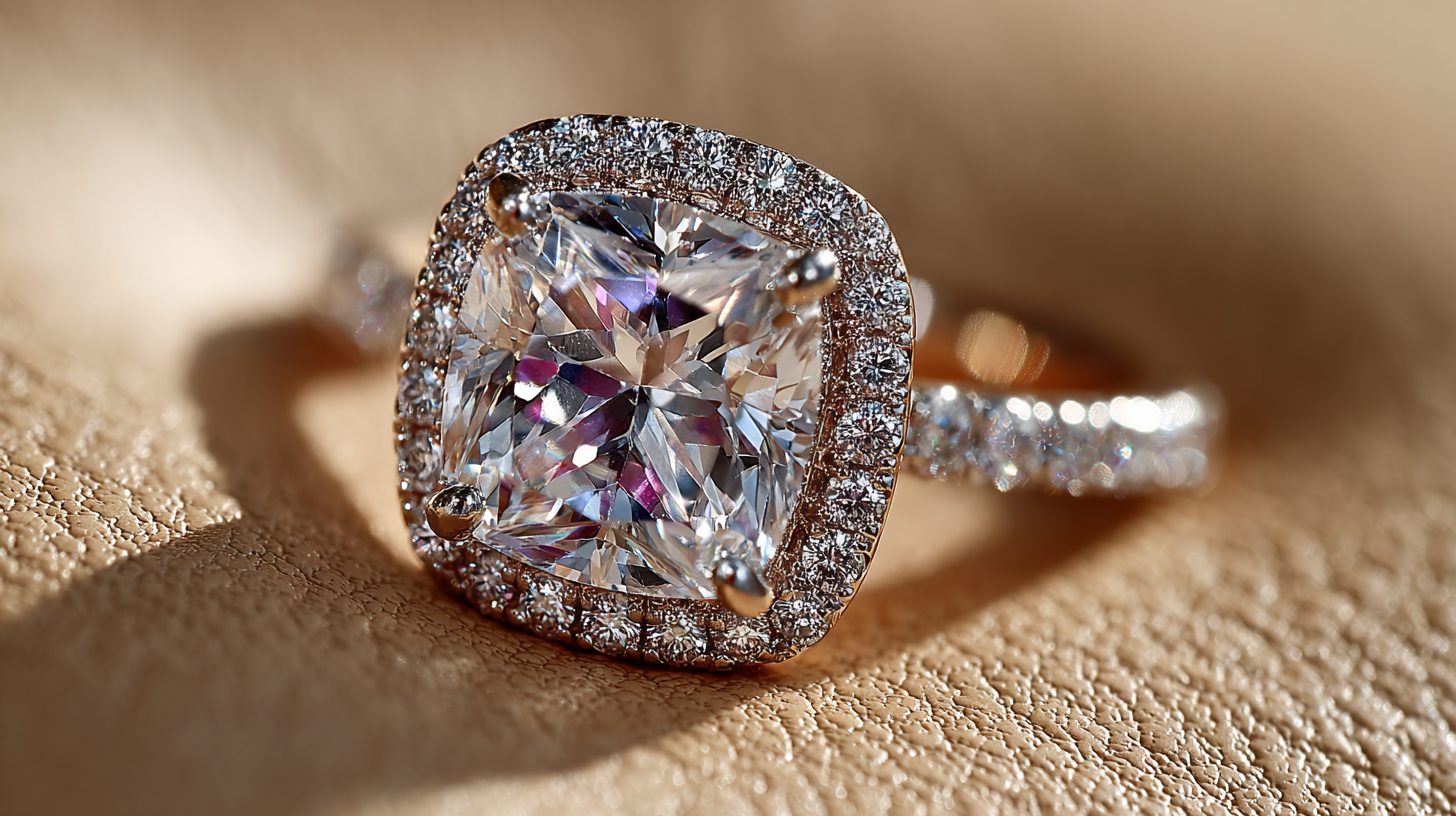
Halo settings are popular because they add visual presence without requiring a much larger center diamond. A halo can make a 1-carat center stone read closer to 1.5 carats from above. Depending on the halo shape and the band style, halos can feel classic, glamorous, or vintage-inspired.
Best for: buyers who want a more noticeable diamond look without doubling the budget.
Works especially well with: round, cushion, oval, pear, and emerald-cut diamonds.
Consider this: halo rings have more small stones, which means more cleaning and inspection over time. The halo must be well-made so the accent diamonds sit evenly around the center stone.

5. Hidden halo engagement ring setting
A hidden halo places small accent diamonds around the basket beneath the center stone, rather than on the top. From above, the ring still reads as a solitaire. From the side, a delicate sparkle line is revealed. It is one of the fastest-growing diamond engagement ring settings of 2026.

This is the setting for someone who wants a refined ring with a little extra diamond detail without making the design feel loud. Hidden halos are especially photogenic in side-profile and on video — the sparkle line reveals itself as the ring moves.
Best for: subtle brilliance, modern engagement rings, and elegant side-profile detail.
Works especially well with: oval, round, cushion, pear, emerald-cut, and radiant-cut diamonds.
Consider this: the hidden halo is meant to be discovered. Make sure your jeweler photographs the ring from the side as well as from above, so the detail isn’t lost.
Shop halo & hidden halo engagement rings →
6. Pavé engagement ring setting
A pavé engagement ring setting uses small diamonds set closely along the band. The result is a soft line of brilliance that frames the center diamond without adding large side stones. Pavé comes from the French word for “paved.”
Pavé bands can be delicate or bold depending on the diamond size, band width, and how far the pavé continues around the ring. A half-pavé band is the most popular today; a full eternity pavé adds the most light but limits future resizing.
Best for: buyers who want extra diamond detail while keeping the center stone the main focus.
Works especially well with: round, oval, cushion, emerald-cut, pear, and radiant-cut diamonds.
Consider this: pavé rings require more care than plain bands. Small accent diamonds collect residue and should be cleaned and inspected every six months. If the wearer is very active with their hands, a plain band or bezel setting may be more practical.
7. Channel-set engagement ring setting
A channel-set engagement ring places small diamonds into a groove along the band, with metal walls holding the stones on each side. The surface sits flush, which makes the ring smoother and more practical than prong-set pavé.
Channel settings often look clean, structured, and modern. They are also common in wedding bands, which makes them a strong choice when planning a matching set.
Best for: someone who wants diamond detail with a smoother, snag-free feel.
Works especially well with: round accent diamonds, princess-cut accents, and baguette-cut diamonds.
Consider this: channel settings can be more difficult to resize depending on how far the diamonds continue around the band.
8. Three-stone engagement ring setting
A three-stone engagement ring features a center diamond with one stone on each side. Traditionally the three stones represent the past, present, and future. The style also works because it gives the ring width, balance, and visual depth.
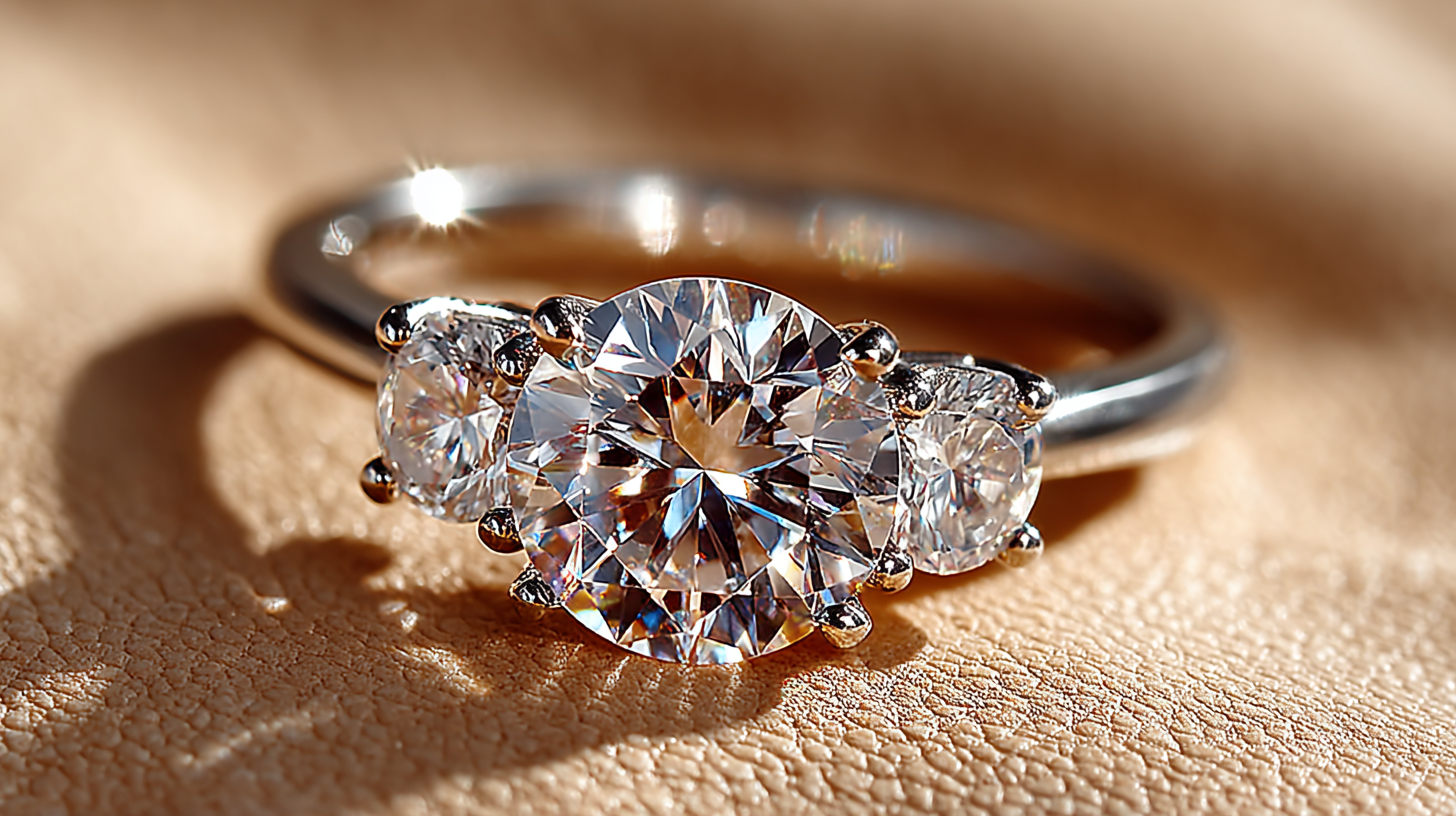

Three-stone rings can be classic or highly unique depending on the side stones. Diamond side stones create a clean, monochromatic look. Sapphire, ruby, emerald, or colored gemstone side stones create contrast, color symbolism, and a more personal design.
Best for: symbolism, balanced design, and a more substantial ring presence.
Works especially well with: oval, emerald-cut, round, pear, cushion, and radiant-cut diamonds.
Consider this: the side stones should complement the center stone, not overpower it. Shape, color, proportion, and height all matter — tapered baguettes and trillions are the most popular side-stone shapes in 2026.
Shop three-stone engagement rings →
9. Side-stone (accent) engagement ring setting
A side-stone (or accent) setting uses smaller diamonds or gemstones along the shoulders of the ring to frame the center stone. It is the middle ground between a solitaire and a halo — more detail than the former, less weight than the latter.

Side stones can include tapered baguettes, pear side stones, round diamonds, or colored gemstone accents. This is one of the strongest ways to add elegance, shape, and dimension around the center stone without overshadowing it.
Best for: adding elegance and dimension without going full halo.
Works especially well with: emerald-cut, oval, round, pear, and cushion-cut diamonds.
Consider this: side stones should be proportioned carefully. If they are too large, the ring loses focus. If they are too small, the effect won’t feel intentional.
Shop engagement rings with side stones →
10. Split-shank engagement ring setting
A split-shank setting has a band that separates as it approaches the center stone. The split creates open space and gives the ring an architectural, three-dimensional look — and it’s especially flattering on long fingers.
Split-shank engagement rings can feel soft and romantic, or bold and sculptural — depending on the width of the split and whether the band carries pavé diamonds. The split can be subtle (a hairline gap) or dramatic (a full diamond fork).
Best for: someone who wants a distinctive setting with more design presence.
Works especially well with: oval, cushion, pear, emerald-cut, and radiant-cut diamonds.
Consider this: split-shank rings can sit differently next to a wedding band. Some designs need a curved or custom-fitted band to sit flush. Plan the wedding band early.
11. East-west engagement ring setting
An east-west setting turns an elongated diamond horizontally across the finger instead of vertically. The result is modern and unexpected without making the ring overly ornate. Strongest with shapes that have natural length: emerald, oval, marquise, radiant, and elongated cushion.
East-west settings are especially strong for diamond shapes with length. Worn horizontally, an emerald cut feels confident and minimalist. An east-west marquise can read as either vintage or futuristic, depending on the band.
Best for: modern buyers who want something different without going ornate.
Works especially well with: emerald-cut, oval, marquise, radiant, and elongated cushion diamonds.
Consider this: east-west settings cover more finger width visually, so proportion matters. The stone should look intentional, not stretched or off-balance.
12. Cluster engagement ring setting
A cluster engagement ring uses multiple stones grouped together to create a larger overall design — floral, geometric, vintage-inspired, asymmetrical, or fully custom. It is one of the strongest settings for a unique engagement ring instead of a traditional single-stone design.

Cluster rings can be made entirely from diamonds, or they can mix in colored gemstones for a more personal palette. The best cluster designs have rhythm, spacing, and a clear shape — too many stones without structure can feel busy.
Best for: one-of-a-kind engagement rings, artistic designs, gemstone combinations.
Works especially well with: mixed diamond cuts, colored gemstones, round diamonds, pear shapes, marquise shapes, and antique stones.
Consider this: a cluster ring lives or dies on craftsmanship. Look for clean spacing, even prong height, and a hand-finished gallery.
Shop cluster engagement rings →
13. Vintage and vintage-inspired engagement ring settings
Vintage engagement rings carry the character of a past era. Vintage-inspired engagement rings borrow design details from antique jewelry — milgrain, filigree, hand-engraving, old mine cuts, old European cuts, and detailed galleries — but are newly made. Both feel personal because they don’t look mass-produced.

Vintage-inspired rings can be romantic, detailed, and full of texture without needing to be oversized. They often pair beautifully with old mine, old European, oval, emerald, and cushion diamonds — shapes that have soft, antique-like brilliance.
Best for: buyers who want history, character, and a ring that feels different from modern catalog designs.
Works especially well with: old mine diamonds, old European cuts, oval, emerald, cushion, sapphires, rubies, and one-of-a-kind gemstones.
Consider this: a true vintage ring should be inspected carefully for prong strength, stone security, and past repairs. A vintage-inspired ring offers the look of antique jewelry with a newly made, structurally sound mounting.
Shop vintage engagement rings →
14. Cathedral engagement ring setting
A cathedral setting uses arches of metal that rise from the band to lift the center diamond. The arches resemble the vaulted ceiling of a cathedral, adding height, side-profile drama, and structural support. Cathedral settings can be paired with solitaires, halos, three-stone designs, or pavé bands.
Cathedral settings are one of the most under-discussed engagement ring options online — and one of the most beautiful in side profile. The arches give the ring a regal, architectural lift while still allowing plenty of light into the diamond.
Best for: buyers who want a tall, dramatic side profile and architectural detail.
Works especially well with: round, oval, princess, cushion, and emerald-cut diamonds.
Consider this: a higher-set cathedral can catch on clothing or hair. If a low profile matters, ask for a “low cathedral” or “half cathedral” variation that keeps the arch but reduces the height.
15. Tension engagement ring setting
A tension setting holds the diamond between two ends of the band by pressure rather than prongs or a bezel. The diamond appears suspended in mid-air, making it one of the most modernist-looking engagement ring settings.
Tension settings are stronger than they look — the band exerts thousands of pounds of pressure on the stone — but they require expert craftsmanship to ensure long-term security and resizing flexibility. Tension settings are best for diamonds that are durable on the corners (round, princess, emerald) and graded VS or higher in clarity to avoid stress points.
Best for: minimalist, sculptural, modern aesthetic.
Works especially well with: round, princess, and emerald-cut diamonds.
Consider this: tension settings are difficult to resize once set. If finger size may change significantly, a “tension-style” setting (which uses hidden prongs to mimic the look) is a smarter choice.
16. Floating diamond engagement ring setting
A floating diamond engagement ring uses a tension or minimal-prong setting so the diamond appears suspended in air, with no visible support beneath it. This modern look is best for round, oval, emerald, and princess-cut diamonds with strong proportions.
Floating settings can also be created with very thin compass prongs, a half-bezel from below, or a structural channel that disappears into the band. The shared design intent: maximize the visual presence of the diamond and minimize the metal around it.
Best for: a weightless, conceptual look with strong center-stone presence.
Works especially well with: round, oval, emerald, princess, and radiant cuts with excellent symmetry.
Consider this: floating settings work best with diamonds graded SI1 or higher and with strong cut symmetry. Inclusions and asymmetry are amplified when there is so little metal to anchor the design.
17. Tiffany-style (six-prong solitaire) setting
A Tiffany-style setting refers to the iconic six-prong solitaire silhouette popularized by Tiffany & Co. in 1886, which lifts a round diamond above the band so light enters from every angle. Today, “Tiffany-style” describes any 6-prong knife-edge solitaire — not the Tiffany & Co. trademark itself.
The Tiffany-style 6-prong is the most-recognized engagement ring silhouette in the world. Its appeal: maximum brilliance, balanced symmetry, and a quiet elegance that has lasted for nearly 140 years. It pairs beautifully with virtually any wedding band.
Best for: heritage-feeling, timeless solitaires.
Works especially well with: round brilliant, oval, and cushion-cut diamonds.
Consider this: a true Tiffany & Co. setting is trademarked and only sold by Tiffany. A Tiffany-style setting from a custom jeweler offers the same silhouette and feel — often with a higher gold karat, hand-finishing, and the diamond of your choice.
Best engagement ring settings by diamond shape
The diamond shape should drive the setting choice — not the other way around. A setting that flatters a round diamond may overpower a marquise; a setting that protects a pear may feel heavy on a princess.
Round diamond engagement ring settings
Round brilliants are the most flexible — they work in nearly every setting. The most popular pairings in 2026 are solitaire 6-prong, halo, hidden halo, three-stone with tapered baguettes, and cathedral solitaires. Pavé and channel-set bands also flatter rounds especially well.
Oval diamond engagement ring settings
Oval diamonds want a setting that emphasizes their elongation. Best matches: solitaire with compass prongs, hidden halo, east-west bezel, three-stone with trillions, and split-shank pavé. Avoid traditional 4-prong cardinal positions for ovals — compass (or “rotated”) prongs flatter the shape better and reduce the bow-tie effect.
Pear-shaped diamond engagement ring settings
Pear diamonds need a V-prong or bezel at the pointed tip to protect against chipping. Best matches: solitaire with V-prong, halo, hidden halo, bezel, and three-stone with tapered baguettes. Pears can be worn point-up (most common) or point-down, depending on personal taste.
Emerald-cut diamond engagement ring settings
Emerald cuts have a step-cut faceting style that rewards minimal settings. Best matches: solitaire 4-prong, bezel, east-west, three-stone with trapezoid or baguette side stones, and cathedral. Halos can work but should be tightly fit to keep the architecture clean.
Cushion-cut diamond engagement ring settings
Cushion cuts have a soft, romantic outline that pairs beautifully with detail. Best matches: halo, hidden halo, vintage-inspired with milgrain or filigree, three-stone, and cathedral solitaire.
Marquise diamond engagement ring settings
Marquise diamonds are dramatic and finger-lengthening. Best matches: solitaire with V-prong tips, east-west, bezel, and three-stone with rounds or pears. The pointed ends need V-prong protection.
Princess-cut diamond engagement ring settings
Princess cuts are bold, modern, and require corner protection. Best matches: solitaire 4-prong (V-prong corners), bezel, cathedral, halo, and tension.
Radiant-cut diamond engagement ring settings
Radiants combine the brilliance of a round with the elongated outline of an emerald cut. Best matches: halo, three-stone with trapezoid sides, east-west bezel, and split-shank.
Asscher-cut diamond engagement ring settings
Asschers are square step-cuts with deep windmill faceting. Best matches: solitaire bezel, vintage-inspired with milgrain, and art-deco three-stone with baguettes.
Heart-shaped diamond engagement ring settings
Heart-shaped diamonds need a V-prong at the cleft to protect the point. Best matches: solitaire with V-prong, halo, and three-stone. Halos are especially flattering because they emphasize the heart silhouette.
Lab-grown vs natural diamond engagement ring settings
Both lab-grown and natural diamonds work in every engagement ring setting. The choice is about budget, value philosophy, and stone size — not about whether the setting will hold the diamond. Lab-grown diamonds let you choose a larger center stone for the same budget; natural diamonds carry rarity, geological history, and stronger long-term resale.
Because lab-grown stones are typically priced 60–80% lower than mined diamonds of the same grade, halo, three-stone, and 3-carat solitaire settings are especially popular pairings — they showcase size. Natural diamonds remain the choice for buyers who value provenance, single-source mining traceability, and long-term value retention.
For more on the tradeoffs, see the Natural Diamond Council for the natural-diamond perspective and GIA’s research on lab-grown diamonds for the science.
- Best lab-grown setting: 3-carat hidden-halo solitaire — uses budget on size while keeping the design refined.
- Best natural-diamond setting: classic 6-prong solitaire or three-stone — both age well and protect resale.
- Best mixed approach: natural center stone with lab-grown side accents — concentrates rarity where it’s seen.
Engagement ring settings by carat size
Carat size and setting style should be chosen together. A setting that flatters a 1-carat diamond can feel undersized around a 4-carat stone — and vice versa.
| Carat size | Setting style that flatters most | Why |
|---|---|---|
| 0.5 – 0.75 ct | Halo, vintage-inspired, cluster | Adds visual weight to a smaller center stone. |
| 1 ct | Solitaire, hidden halo, three-stone | The classic 1-carat range works in nearly every setting. |
| 2 ct | Solitaire, bezel, cathedral, three-stone | Lets the stone speak; bezel adds protection at this size. |
| 3 ct | Solitaire, hidden halo, east-west, side-stone | Showpiece stones rarely need a halo to look big. |
| 4 ct + | Solitaire, bezel, cathedral | Minimal settings keep the stone the focus and reduce visual noise. |
Best engagement ring settings by lifestyle
For active wearers (gym, climbing, hands-on work)
Bezel, half-bezel, low-profile solitaire, channel set, and tension-style settings minimize snagging and protect the diamond edge.
For healthcare, food service, and frequent glove wearers
Bezel and flush-set settings sit smooth against gloves; remove rings during shifts and clean ultrasonically.
For everyday office wearers
Almost any setting works. Solitaire, halo, hidden halo, and three-stone are the most popular at this lifestyle level.
For statement-first wearers
Cathedral, split-shank halo, three-stone with tapered baguettes, cluster, and vintage-inspired designs deliver the most visual presence.
Wedding-band compatibility: will my engagement ring sit flush?
Bezel and low-profile solitaire settings sit flush with most straight wedding bands. Halo, hidden halo, and three-stone rings often need a curved or contoured wedding band. If a flush fit matters, plan the wedding band during the engagement-ring design process — not after.
A gap between the engagement ring and wedding band is not always a problem — many wearers love the layered look. But if a flush fit matters, ask these five questions before buying:
- Is the basket raised enough for a straight band to slide beneath?
- Does the halo or three-stone profile extend beyond the band width?
- Will a curved or contoured wedding band be needed?
- Is the setting symmetrical enough for stacking on either side?
- Is the engagement ring band too wide or too detailed for a wedding band to sit beside it?
For custom engagement rings, this should be planned from the beginning. The engagement ring and wedding band don’t need to match perfectly — but they should speak the same design language.
Should you choose a ready-to-ship or custom engagement ring?
Ready-to-ship engagement rings
A ready-to-ship engagement ring is ideal when you want to buy a finished ring without waiting for a full custom build. It is also the better path when you want to see the exact ring before purchasing — useful for one-of-a-kind pieces, vintage rings, gemstone engagement rings, and unique diamond rings.
Shop ready-to-ship engagement rings →
Custom engagement rings
A custom engagement ring is the better choice when you already know the diamond shape, setting style, metal, and details you want — or when you have a specific stone size, gemstone combination, matching wedding band, or personal story you want the ring to reflect. The best custom rings are often simple, intentional, and proportioned perfectly around the center stone.
At Treasured & Co. in Astoria, New York, custom engagement rings are built around natural diamonds, lab-grown diamonds, sapphires, rubies, emeralds, vintage stones, or one-of-a-kind gemstones. The custom process typically takes 4–8 weeks, including CAD design, wax model approval, and final hand-finishing.
How to choose the right engagement ring setting (5 questions)
- Start with the center stone. The diamond or gemstone shape should guide the setting. Oval, pear, marquise, emerald-cut, and cushion diamonds each need different proportions and protection.
- Choose the level of detail. Minimal? Start with solitaire, bezel, or hidden halo. Detailed? Look at halo, pavé, three-stone, cluster, or vintage-inspired settings.
- Think about daily wear. A ring worn every day should feel comfortable and secure. Avoid overly delicate prongs or exposed pavé in high-contact areas if the wearer is active.
- Plan the wedding band. Decide how the engagement ring will sit next to a wedding band before finalizing the setting.
- Keep the design personal. The best engagement ring setting is not the trendiest — it is the one that fits the person, the diamond, and the life around it.
Engagement rings in New York City & Astoria
Treasured & Co. is an independent jeweler based in Astoria, Queens — a short ride from the Manhattan Diamond District. We work directly with clients across New York City, Long Island City, Brooklyn, and Manhattan to design custom engagement rings, source one-of-a-kind diamonds and gemstones, and bring vintage settings back to life.
If you’re looking for an engagement ring near you in Astoria, we offer in-person consultations by appointment, complimentary CAD previews, and full custom design — all under one roof, all handcrafted.
Book an Astoria consultation →
Final thoughts: the best setting is the one that makes the diamond feel personal
There is no single best engagement ring setting for everyone. A solitaire may be perfect for one person. A bezel may be safer for someone active. A hidden halo may give just enough detail. A three-stone ring may carry more meaning. A vintage ring may feel more personal than anything newly made.
The setting should protect the stone, complement the diamond shape, feel comfortable on the hand, and reflect the person wearing it. At Treasured & Co., we offer unique engagement rings, ready-to-ship rings, vintage engagement rings, and custom designs for those who want something more personal than a standard catalog setting.
Explore unique engagement rings →
FAQs about engagement ring settings
What is the most popular engagement ring setting in 2026?
Solitaire engagement rings remain the most popular setting because they are timeless, low-maintenance, and keep the focus on the center diamond. Halo, hidden halo, and three-stone settings come next in popularity. Hidden halos and bezel-set solitaires are the fastest-growing styles in 2026.
What engagement ring setting makes a diamond look bigger?
Halo settings make a diamond look the largest because the surrounding accent diamonds extend the visual diameter. Hidden halos, thin pavé bands, and four-prong settings also make the center stone appear larger by reducing surrounding metal. A halo can make a 1-carat center stone look closer to 1.5 carats from above.
What is the most secure engagement ring setting?
A bezel setting is the most secure because a thin rim of metal wraps the entire edge of the diamond. A six-prong setting is next, especially for round diamonds. Tension settings look minimal but are also extremely strong because the band itself holds the stone under pressure.
What engagement ring setting is best for an active lifestyle?
Bezel, half-bezel, low-profile solitaire, and channel-set designs are best for active lifestyles. They sit close to the finger, have no exposed prong tips, and rarely snag on clothing or gym equipment. Avoid high-set cathedral or delicate pavé halos if the wearer works with their hands daily.
Are halo engagement rings hard to maintain?
Halo rings require more care than simple solitaire rings because they include small accent diamonds around the center stone. Clean every two weeks with a soft brush and warm soapy water, and have the prongs inspected by a jeweler every six months.
What is a hidden halo engagement ring?
A hidden halo engagement ring places small accent diamonds around the basket beneath the center stone, rather than on the top. From above, the ring still reads as a solitaire. From the side, a delicate sparkle line is revealed.
Which setting is best for an oval diamond engagement ring?
Oval diamonds work beautifully in solitaire, hidden halo, bezel, three-stone, split-shank, and east-west settings. The most popular choice in 2026 is a hidden halo or compass-prong solitaire — both styles emphasize the elongated shape and finger-lengthening effect.
Which setting is best for a pear-shaped diamond?
Pear-shaped diamonds need a V-prong or bezel at the pointed tip to protect against chipping. The most popular settings are solitaire with V-prong, halo, hidden halo, bezel, and three-stone designs.
What is a cathedral setting engagement ring?
A cathedral setting uses arches of metal that rise from the band to lift the center diamond. The arches resemble cathedral architecture and add height, side-profile detail, and structural support. Cathedral settings can be paired with solitaires, halos, three-stone designs, or pavé bands.
What is a floating diamond engagement ring?
A floating diamond engagement ring uses a tension or minimal-prong setting so the diamond appears suspended in air with no visible support beneath it. This modern look is best for round, oval, emerald, and princess-cut diamonds with strong proportions.
Should I choose a lab-grown or natural diamond for my engagement ring setting?
Both work in every setting. Lab-grown diamonds let you choose a larger center stone for the same budget, which is why halo, three-stone, and 3-carat solitaire settings are especially popular with lab-grown stones. Natural diamonds remain the choice for buyers who value rarity, geological history, and long-term resale.
Should my engagement ring sit flush with my wedding band?
It depends on the look you want. Bezel and low-profile solitaire settings sit flush with most straight wedding bands. Halo, hidden halo, and three-stone rings often need a curved or contoured wedding band. If a flush fit matters, plan the wedding band during the custom design process.
Can I customize an engagement ring setting?
Yes. A custom engagement ring setting is designed around your preferred diamond shape, gemstone, metal color, band profile, side stones, and wedding-band fit. At Treasured & Co. in Astoria, New York, custom rings are crafted around natural diamonds, lab-grown diamonds, sapphires, rubies, emeralds, and one-of-a-kind vintage stones.
Last updated April 28, 2026. Diamond shape recommendations reflect current Treasured & Co. design practice. Source links: Natural Diamond Council — Engagement Ring Settings, GIA.